
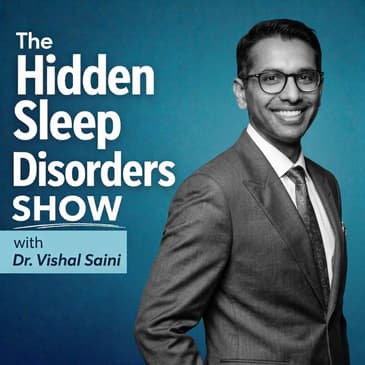
Welcome back to the Hidden Sleep Disorder Show! In this episode, we’re joined by Dr. Vishal Saini to unravel the mysteries behind sleep studies, from what really happens during an overnight test at a sleep center to how modern home-based tests work and their limitations. Whether you’ve been referred for a sleep study, had confusing results, or are simply curious about why sleep disorders so often fly under the radar, this conversation will help you understand the science, technology, and critical decision-making behind diagnosing hidden sleep issues. We’ll break down the differences between at-home and in-lab sleep tests, discuss the role of daytime nap studies, and offer practical advice on what your test results do (and don’t) reveal about your health. If you or someone you know struggles with unexplained exhaustion or poor sleep, grab a notebook - this episode will empower you to get the answers you need.
Timestamps:
00:00 Understanding sleep studies
06:15 Traditional home sleep test setup
07:58 Using sleep rings for apnea detection
13:01 Insurance impact on sleep apnea testing
16:58 Importance of overnight sleep study
20:15 Understanding medical test limitations
23:25 Ruling out sleep apnea first
27:10 Sleep study and test insights
28:32 Concerns about home sleep tests
31:50 Upcoming episodes preview
What Really Happens in a Sleep Study? Insights from the Hidden Sleep Disorder Show
If you’ve ever wondered what a sleep study involves or if you’re navigating unexplained fatigue and suspect you might have a hidden sleep disorder, you’re not alone. On the latest episode of the Hidden Sleep Disorders Show, Dr. Vishal Sani breaks down the science, process, and importance of both home and in-lab sleep studies. Here are the highlights and most valuable takeaways from their conversation.
Understanding Sleep Studies: The Basics
A sleep study, often referred to as polysomnography, is a comprehensive diagnostic tool used to investigate what happens when a person sleeps. According to Dr. Vishal Sani, a sleep study is a broad term for different kinds of tests designed to collect physiological signals while you sleep. These signals might include measurements of your oxygen levels, heart rate, breathing patterns, and brain activity. The purpose is to detect underlying sleep disorders that can seriously impact your health and quality of life.
Home Sleep Tests vs. In-Lab Sleep Studies
Technological advancements have led to two primary ways of conducting sleep studies. Dr. Vishal Sani distinguishes between home sleep tests and in-lab sleep studies. Home sleep tests are user-friendly and often involve wearing a ring-like device or a small belt, sometimes with a finger probe and a nasal cannula to measure airflow and oxygen levels.
Home sleep tests are far more convenient but bring certain limitations. They're mainly designed to detect obstructive sleep apnea and are best suited for individuals at high risk for this condition. As Dr. Vishal Sani explains, home tests can produce false negatives or positives because they collect less data and often infer results indirectly from a narrow set of measurements.
On the other hand, in-lab sleep studies take place in a sleep center and involve attaching multiple electrodes and sensors to your scalp, face, chest, and legs. This approach allows for detailed recording of brain waves, muscle activity, breathing effort, and eye movement. This comprehensive setup provides much more information, making it the gold standard for diagnosing a range of sleep disorders, including narcolepsy and other conditions not always detected through home testing.
What Actually Happens During an In-Lab Sleep Study?
For those wary of what the overnight experience entails, Dr. Vishal Sani demystifies it. After arriving at the lab, patients are checked into a private, hotel-like room. Once settled, a technician applies electrodes to various points on the body to collect data throughout the night. The goal is to capture a comprehensive physiological portrait of sleep patterns, disturbances, and potential disorders.
A key point is that this multi-channel approach enables detection of sleep stages, such as rapid eye movement (REM) sleep, as well as specific problems like sleepwalking, restless legs, or acting out dreams. Patients concerned about comfort should know that considerable effort goes into creating a relaxing environment to facilitate a representative night of sleep.
The Role of Daytime Sleepiness and Nap Studies
Unexplained daytime fatigue often points to complex sleep disorders. In these cases, a specialized test called the Multiple Sleep Latency Test (MSLT) might be ordered. As Dr. Vishal Sani details, the MSLT measures how quickly a person falls asleep in a quiet environment during the day and can reveal abnormalities like going into REM sleep too quickly, which is characteristic of narcolepsy. This test is done after an overnight study to ensure sleep deprivation does not skew the results.
What to Expect from Sleep Study Results
Many patients receive a sleep study report only to find their results labeled “normal” despite ongoing symptoms. Dr. Vishal Sani reminds listeners that every test, including in-lab and home studies, comes with limitations and the potential for false negatives or positives. It's crucial to review not just the sleep apnea index but also oxygen levels and sleep fragmentation patterns, some of which may not be fully captured by a home test.
Patients should also ask their providers about additional metrics such as the hypoxic burden, which reflects the percentage of sleep time spent at low oxygen levels. According to Dr. Vishal Sani, discussing these nuances helps ensure no hidden sleep disorder is overlooked.
Final Thoughts: Be Proactive and Informed
Sleep studies are invaluable tools in uncovering the root causes of chronic fatigue and sleep issues. However, they are most effective when interpreted by knowledgeable clinicians who understand both their capabilities and limitations. As Dr. Vishal Sani emphasizes, being proactive, asking the right questions, and opting for multifaceted testing when needed are key steps toward better sleep and well-being.
For anyone struggling with unexplained exhaustion, understanding the process and significance of sleep studies can be the first step toward answers and effective treatment. Make sure to consult with qualified sleep specialists and stay informed about your options.
If you enjoyed these insights, don’t forget to subscribe to the Hidden Sleep Disorder Show for more expert-driven discussions on sleep health.
Dr. Vishal Saini - https://www.mwcsd.com/dr-vishal-saini/
Show Website - https://the-hidden-sleep-disorders-sho.beam.ly/
Podcast Producer - https://tophealth.care/
“Disclaimer: Informational only. Not medical advice. Consult your doctor for guidance.”