
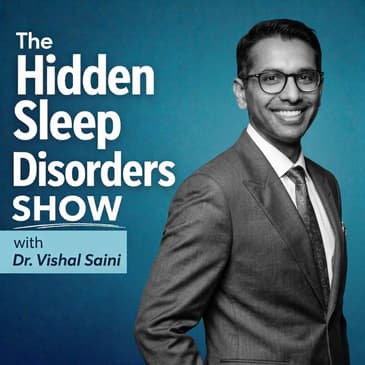
Welcome back to the Hidden Sleep Disorders show, where we shine a light on the often-misunderstood world of sleep disorders. In today’s episode, sleep specialist Dr. Saini unpacks one of the most frustrating experiences for patients: being told their sleep study is “normal,” even when exhaustion and daytime sleepiness persist. Dr. Saini explores what sleep studies actually measure, why certain disorders are missed or underdiagnosed, and how the right clinical judgement makes all the difference. Whether you’re confused by your own negative sleep study or curious about advances in sleep diagnostics, today’s episode is all about understanding the real value and real limitations of sleep tests.
Timestamps:
00:00 Understanding normal sleep study results
05:25 Analyzing comprehensive physiological data
07:39 In lab sleep study options
11:06 Home sleep test technology evolution
15:56 Understanding different sleep disorders
19:24 Limitations of home sleep tests
21:04 Importance of sleep logs before tests
25:41 Challenges with MSLT accuracy
30:40 Advocating for detailed sleep testing
34:54 Understanding different sleep studies
35:56 Customizing Sleep Studies for Patients
39:30 Closing remarks and thanks
Why a “Normal” Sleep Study Doesn’t Mean You’re Fine: Insights from Hidden Sleep Disorders Show
Sleep disorders are more common than we think, yet for many people seeking answers, a so-called “normal” sleep study can leave them feeling frustrated and lost. In the latest episode of the Hidden Sleep Disorders Show, Dr. Vishal Saini uncovers important truths about sleep studies, misdiagnoses, and why understanding the limitations of different sleep tests is the first step toward getting real help for chronic fatigue and daytime sleepiness. If you or someone you know has been told their sleep study came back normal, but they still don’t feel well, this summary is for you.
Not All Sleep Studies are Created Equal
One huge insight shared by Dr. Vishal Saini at the very start of the episode is that there are many kinds of sleep disorders and not just sleep apnea. Many patients think that passing a sleep study means there are no sleep problems, but as Dr. Vishal Saini explains, a negative test for sleep apnea doesn’t mean everything is fine. Home sleep tests, for instance, are mainly designed to detect obstructive sleep apnea. They measure things like oxygen saturation, breathing effort, and airflow, but they aren’t effective in identifying other common disorders such as restless legs, narcolepsy, or chronic insomnia.
The Difference Between Home and In-Lab Sleep Studies
The podcast dives deep into the major differences between home and in-lab sleep studies. According to Dr. Vishal Saini, in-lab studies are more comprehensive and can monitor brain activity, eye movements, muscle tone, heart waves, and more. These tests provide a rich source of data that is vital for a thorough diagnosis. However, Dr. Vishal Saini cautions that even the most detailed studies have their limits and must be interpreted with clinical expertise.
The conversation clarifies that while home sleep tests offer convenience, they are limited mostly to detecting sleep apnea. In fact, patients may be misled by negative home test results if their real problem is outside this narrow focus.
Why False Negatives Happen in Sleep Testing
One of the recurring themes in the episode is the danger of false negatives. Dr. Vishal Saini shares real patient stories such as the young woman who spent years searching for answers only to be told by a home sleep test that nothing was wrong. The reality is that home sleep tests can be falsely negative, especially in people without typical risk factors for sleep apnea. The conditions most likely to be missed include narcolepsy, restless legs syndrome, insomnia, and other less common sleep disorders.
The Importance of Clinical Judgment
Technology and data are essential, but Dr. Vishal Saini emphasizes at that clinical skill, judgment, and a holistic understanding of a patient’s unique circumstances are crucial for proper diagnosis and treatment. Machines can read data, but they cannot replace an experienced physician’s insight into symptoms and life context.
What to Do If You Still Feel Tired After a Normal Sleep Study
For listeners who’ve had a sleep study and still feel exhausted, Dr. Vishal Saini advises not taking a single negative test as the final word. Patients should advocate for themselves and communicate their ongoing symptoms clearly to their healthcare team. It’s important to ask whether tests are only focusing on sleep apnea or if your provider is looking for other possible conditions.
Advances in Sleep Diagnostics
While the current tests have their limits, hope is on the horizon. Dr. Vishal Saini shares at that sleep medicine is evolving, with improved home testing devices and analytical tools driven by machine learning. These advances could soon help diagnose a wider range of disorders and make sense of the vast data captured during sleep studies.
Key Takeaways for Patients
Understand different sleep tests serve different purposes
Home sleep tests mainly detect obstructive sleep apnea and often miss other conditions
In-lab sleep studies provide more comprehensive results
A “normal” result does not always mean there is no problem
Advocate for your health and seek specialized evaluation
If you or someone you know is still struggling with fatigue or sleepiness despite “normal” test results, don’t give up. Choosing the right specialist and asking the right questions can make all the difference. Make sure you listen to this enlightening episode of the Hidden Sleep Disorders Show for more in-depth information and expert advice.
Dr. Vishal Saini - https://www.mwcsd.com/dr-vishal-saini/
Show Website - https://the-hidden-sleep-disorders-sho.beam.ly/
Podcast Producer - https://tophealth.care/
“Disclaimer: Informational only. Not medical advice. Consult your doctor for guidance.”